I first became fascinated by the symbol on my first trip to Mojacar way back in about 1999. Indeed, if you spend any time in Almería, whether you live here full-time or are visiting on holiday, you will almost certainly notice a curious little figure appearing in unexpected places. Painted on village walls, carved into stone, hanging from keyrings, or decorating ceramics and jewellery, this simple human-like shape holding an arch above its head is known as the Indalo. Over time, it has become one of the most recognisable and beloved symbols of the province.
For newcomers, the Indalo often sparks curiosity. What exactly is it? Why is it everywhere? And what does it mean? Some see it as a charming local logo, others as a powerful protective symbol, and for many it represents a deep connection between Almería’s ancient past and its modern identity.
In this article, we’ll explore the fascinating story of the Indalo symbol of Almería—from its prehistoric origins and debated meanings to its role in everyday life today. Whether you’re a resident wanting to better understand a local emblem, or a visitor keen to connect more deeply with the area you’re exploring, the Indalo offers a remarkable glimpse into the soul of Almería.
What Is the Indalo?

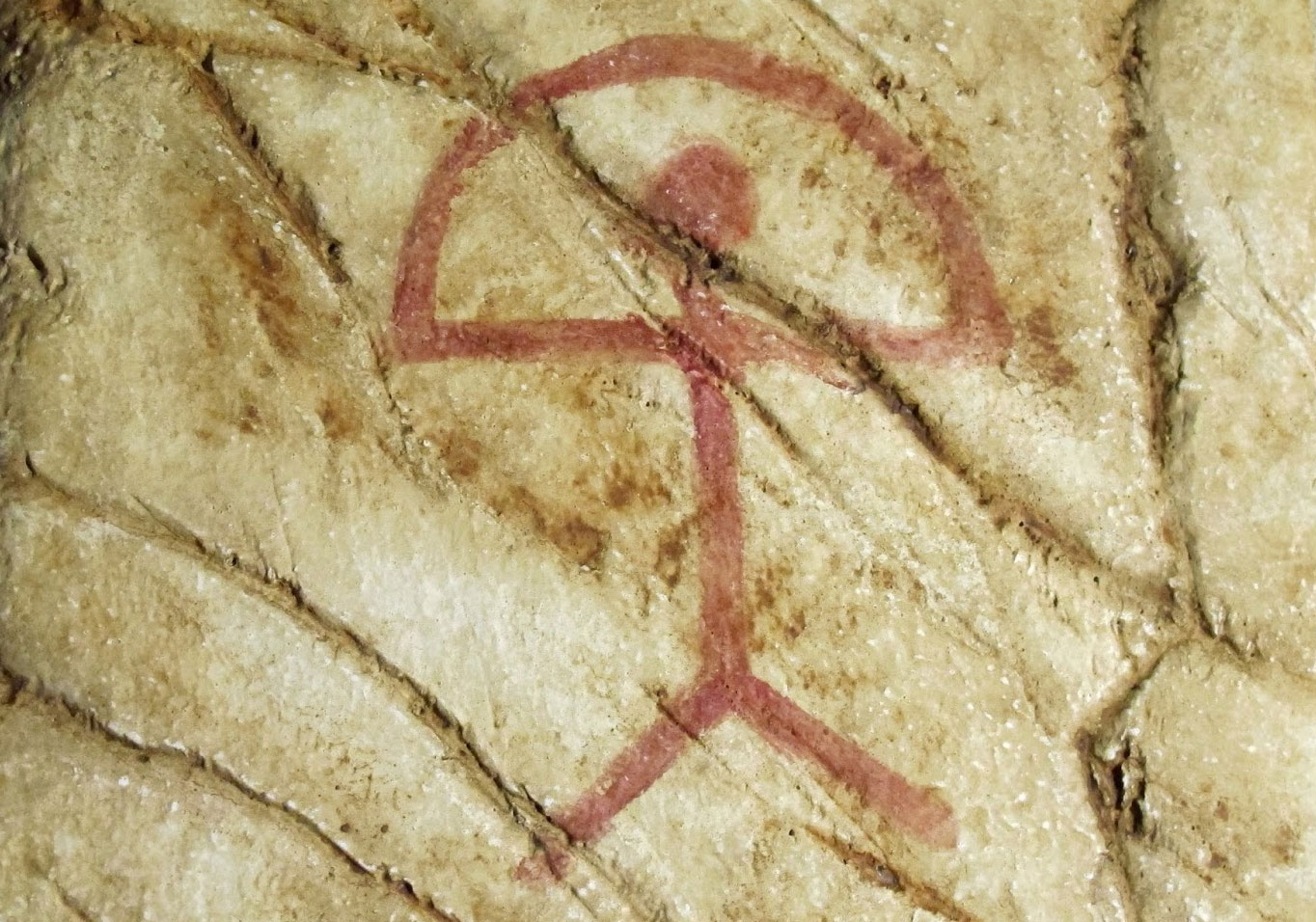
At its simplest, the Indalo is a stylised human figure with arms raised above its head, holding what appears to be a curved object or arch. The design is minimal and instantly recognisable: a straight body, outstretched arms, and a semi-circular shape resting above, often interpreted as a rainbow, a bow, or a protective canopy.
The symbol is sometimes referred to as the “Indalo Man”, and while its form is uncomplicated, its meaning is anything but. Unlike many modern logos, the Indalo was not designed with a clear, written explanation. Instead, its significance has been shaped by centuries of interpretation, folklore, and cultural use.
What makes the Indalo particularly intriguing is its ambiguity. The figure could represent a person, a deity, or a spiritual intermediary. The arched shape above the head has been variously described as a weapon, a celestial symbol, or a protective element shielding the figure below. This openness to interpretation has helped the Indalo endure, allowing each generation to attach its own meaning to the symbol.
Today, the Indalo is widely recognised as an emblem of Almería itself. You’ll see it used in everything from official tourism material to street art and souvenirs, often rendered in bold colours or simplified line drawings. Despite these modern adaptations, the basic form remains faithful to the ancient original—linking contemporary Almería with a symbol created thousands of years ago.
When you spot the Indalo around the province, you’re not just seeing a decorative motif. You’re looking at one of the oldest surviving symbols in Europe, still quietly watching over the landscape where it first appeared.
Origins of the Indalo
The story of the Indalo begins thousands of years ago, long before Almería was a province, a destination, or even a named place. The symbol originates from the Cave of Los Letreros, located near the village of Vélez-Blanco in the north of the province, close to the border with Murcia.
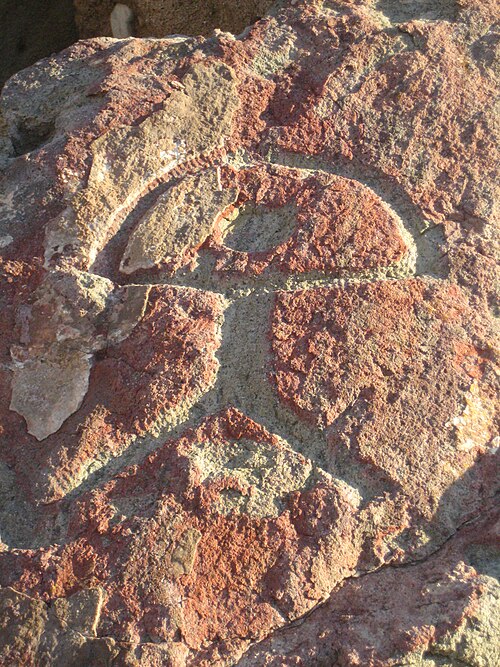
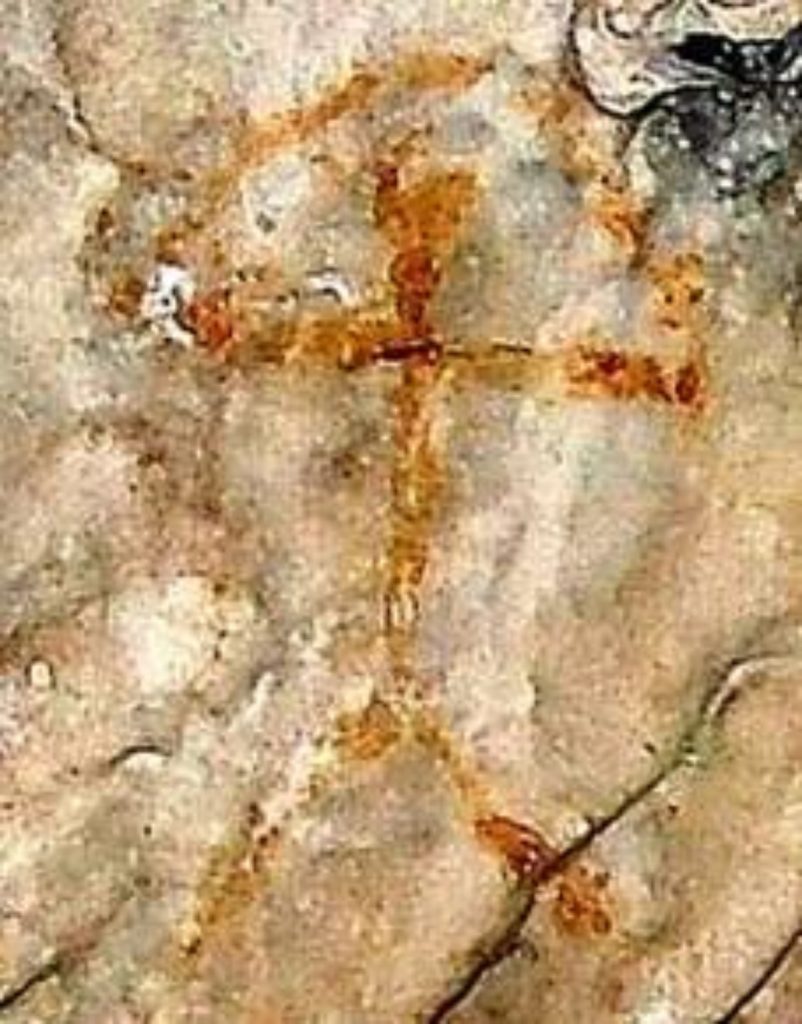
It was here that prehistoric cave paintings were discovered in the early 20th century, revealing a remarkable glimpse into Neolithic life in southeastern Spain. Among the various figures painted onto the rock walls—animals, human shapes, and symbolic forms—one image stood out: a small human-like figure holding a curved object above its head. This figure would later become known as the Indalo.
Archaeologists estimate that the painting dates back around 5,000 to 6,000 years, placing it firmly in the Neolithic period. At the time, this area of Almería was inhabited by early farming communities who used cave art not as decoration, but as a form of communication, ritual, or symbolic expression. Although we cannot know exactly what the artist intended, the care taken to include the figure suggests it held particular significance.
The Cave of Los Letreros is now part of the UNESCO World Heritage Site known as the Rock Art of the Iberian Mediterranean Basin, which recognises the cultural importance of prehistoric cave paintings across eastern Spain. This designation highlights the Indalo’s value not just as a local emblem, but as part of a much wider human story.
Standing at the birthplace of the Indalo today, it’s striking to realise that this simple figure has survived millennia of change. While civilisations rose and fell around it, the symbol remained—eventually emerging from the shadows of prehistory to become a defining icon of modern Almería.
What Does the Indalo Mean? Theories and Interpretations
One of the most fascinating aspects of the Indalo is that, despite its age and prominence, its true meaning remains uncertain. There are no written records to explain why the figure was created or what it was meant to represent. As a result, historians, archaeologists, and local traditions have offered a range of interpretations over the years. Rather than weakening the symbol, this mystery has helped it endure.
Below are some of the most widely discussed theories.
A Hunter or Shaman
One interpretation suggests the Indalo represents a hunter, holding a bow above his head. Hunting was central to survival in prehistoric Almería, and the figure may symbolise strength, skill, or success in the hunt. Others believe the figure could be a shaman or spiritual leader, someone acting as a bridge between the physical and spiritual worlds.
A Rainbow or Celestial Symbol
Another popular theory is that the curved shape represents a rainbow or a celestial arc. In a dry and often harsh environment like Almería, rain would have been vital for crops and survival. The Indalo may therefore symbolise protection, renewal, or divine favour from the sky above.
Protection Against Evil and Storms
Local folklore often describes the Indalo as a protective symbol. Traditionally, it was believed to shield homes from evil spirits, storms, or misfortune. This belief led to the symbol being painted on house walls or placed near entrances—a practice that continues in some areas today.
A Symbol of Fertility or Good Fortune
Some interpretations link the Indalo to fertility and prosperity, reflecting hopes for healthy families, abundant harvests, and good fortune. Over time, this idea evolved into the modern view of the Indalo as a good luck charm, a meaning that resonates strongly with both locals and visitors.
What all these interpretations have in common is the idea of protection and survival—key concerns for the people who first created the symbol. While no single explanation can be confirmed, the Indalo’s power lies in its openness. It allows each person to connect with it in their own way, blending ancient symbolism with personal meaning.
The Indalo and Modern Almería
Although the Indalo was created thousands of years ago, its presence in modern Almería is unmistakable. Over time, this prehistoric figure has evolved from an ancient cave painting into an unofficial emblem of the province—one that reflects local pride, identity, and continuity with the past.
The widespread adoption of the Indalo began in the 20th century, when artists, writers, and intellectuals living in Almería started to promote it as a symbol of the region. It came to represent not just archaeological heritage, but also resilience, creativity, and a strong connection to the land. From that point on, the Indalo steadily worked its way into everyday life.
Today, you’ll see the Indalo used across the province in many forms. It appears in tourism logos, local signage, murals, and public art, as well as in smaller, more personal ways—painted onto houses, carved into stone, or worn as jewellery. Craftspeople incorporate it into ceramics, metalwork, textiles, and leather goods, blending ancient symbolism with contemporary design. And of course you will find it as our logo for this website!
For many residents, the Indalo is more than decoration. It represents belonging—a quiet signal that says this is Almería. For newcomers and expatriates, adopting the symbol can feel like a way of connecting with local culture and history. Visitors, meanwhile, often take the Indalo home as a souvenir, a reminder of time spent in a place with deep roots and a distinct identity.
What makes the Indalo’s modern role especially powerful is that it has never lost its original simplicity. Despite being adapted to countless styles and contexts, the figure remains instantly recognisable. In a rapidly changing world, the Indalo stands as a link between Almería’s ancient past and its living, evolving present.
The Indalo as a Good Luck Charm
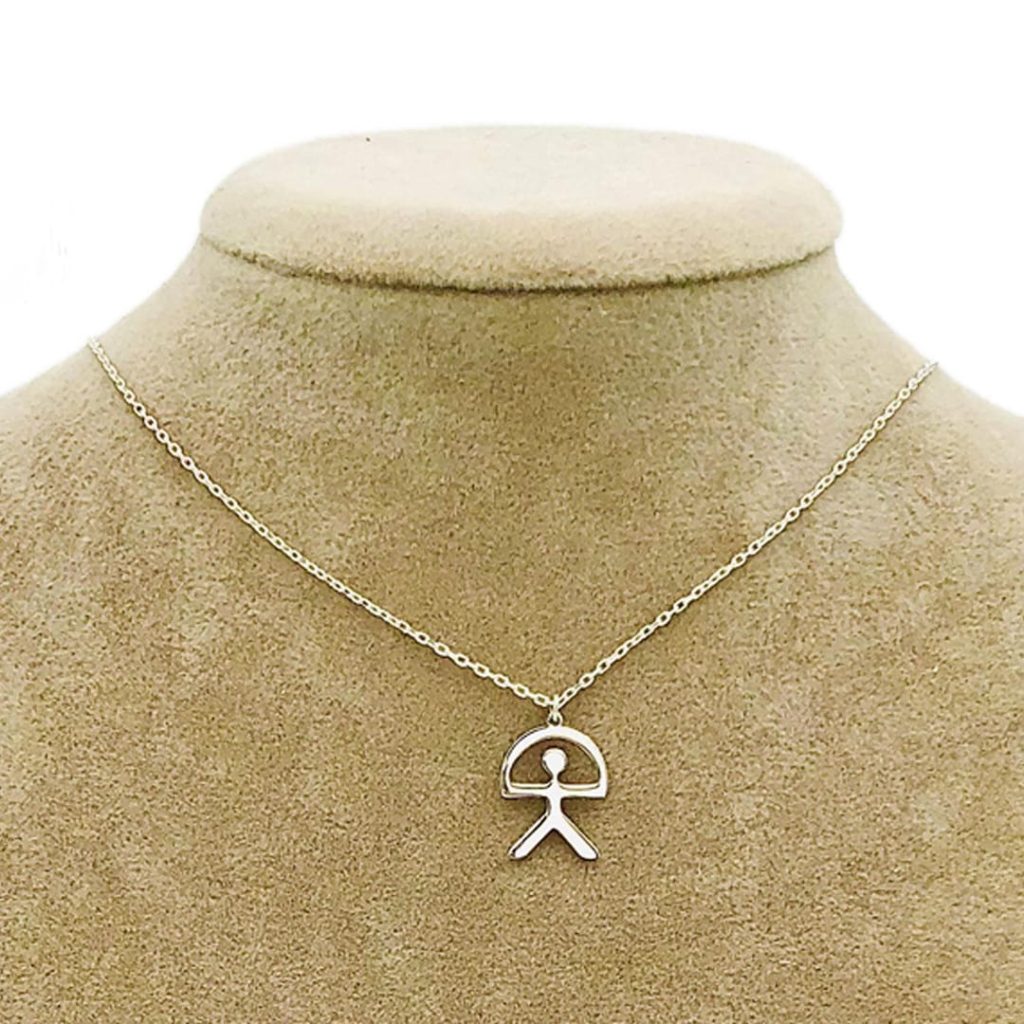
For generations, the Indalo has been thought to offer protection and good fortune. Traditionally, it was painted or carved onto the walls of homes, particularly near entrances, where it was believed to guard the household against misfortune, illness, storms, and negative influences. In a region shaped by a challenging climate and an uncertain agricultural past, symbols of protection carried real emotional weight.
In more recent times, this protective role has taken on a friendlier, more personal form. Many people wear the Indalo as jewellery—on necklaces, bracelets, or keyrings—believing it brings luck, safety, or positive energy. Others keep it in their homes or cars, treating it as a quiet talisman rather than a religious or spiritual object.
For visitors, the Indalo has become one of the most popular souvenirs from Almería. Taking one home is often seen as a way to carry a piece of the province’s spirit with you, as well as a token of good luck. It’s common to hear people say they were given an Indalo by a local “for protection” or “for luck,” reinforcing its reputation as a meaningful gift.
One of the most enduring and widely held beliefs about the Indalo is its role as a good luck charm. While this association may not date directly back to prehistoric times, it has become a deeply rooted part of local tradition and popular culture in Almería.
What’s striking is how naturally the Indalo fits into modern life. Whether you view it as a symbol of ancient belief, a cultural tradition, or simply a charming emblem of Almería, its association with good fortune continues to resonate. In this way, the Indalo remains not just a historical curiosity, but a living symbol—still offering comfort and connection in the present day.
Where Can You See the Indalo in Almería Today?
As well as seeing it on this website, once you start looking for the Indalo, you’ll realise just how widespread it is across Almería. From rural villages to coastal towns, the symbol appears in both obvious and subtle ways, quietly reinforcing its place in local culture. And of course, we have it on our own farmhouse.
One of the most significant locations associated with the Indalo is, of course, its birthplace, the Cave of Los Letreros, near Vélez-Blanco in the north of the province. While access to the cave itself is restricted to protect the fragile rock art, the surrounding area and nearby information panels help visitors understand the importance of the site and its prehistoric paintings. For those interested in history and archaeology, this area offers a powerful sense of connection to Almería’s distant past.
In towns and villages throughout the province, the Indalo often appears on house façades, boundary walls, and village signs. Some are hand-painted and weathered, others carefully crafted in ceramic or metal. You’ll also spot it incorporated into street art and murals, where modern artists reinterpret the ancient symbol in creative ways.
Museums and cultural centres in Almería frequently reference the Indalo, particularly those focused on local history or archaeology. These spaces provide useful context, helping visitors understand how the symbol fits into the broader story of the region. Gift shops attached to museums often sell traditional Indalo-inspired items made by local artisans.
Markets and souvenir shops are another common place to encounter the Indalo. From small charms and magnets to decorative tiles and artwork, it’s one of the most recognisable icons of the province. Unlike mass-produced souvenirs found elsewhere, many Indalo items are locally made, adding to their appeal and authenticity.
Whether you encounter it carved into stone in a quiet village, painted boldly on a wall, or hanging from a necklace, the Indalo has a way of appearing when you least expect it—reminding you that in Almería, ancient history is never far from everyday life.
Why the Indalo Matters to Residents and Visitors
The Indalo matters because it represents far more than an ancient drawing on a cave wall. For many people in Almería, it is a symbol of identity, continuity, and belonging—a reminder that this landscape has been inhabited, valued, and protected for thousands of years.
For residents, the Indalo connects daily life to a deep and distinctive past. In a province often defined from the outside by its climate or coastline, the symbol offers something uniquely local. It speaks of resilience, adaptation, and survival in a challenging environment. Displaying the Indalo—whether on a home, a business sign, or a piece of jewellery—can feel like a quiet affirmation of pride in Almería and its history.
For those who have chosen to make Almería their home later in life, including many expatriates, the Indalo can also serve as a bridge into local culture. Learning its story and embracing its symbolism is often a first step toward feeling rooted in the area, rather than simply passing through it.
Visitors experience the Indalo differently, but no less meaningfully. Understanding the symbol adds depth to a holiday, transforming it from a simple beach break into an encounter with one of Europe’s oldest cultural landscapes. Recognising the Indalo on walls, signs, and souvenirs gives travellers a sense of discovery—an insight into something authentic that belongs specifically to this place.
Ultimately, the Indalo matters because it links past and present. It reminds both residents and visitors that Almería is not just a destination, but a living region shaped by thousands of years of human experience. In noticing and understanding the Indalo, people connect more deeply with the land and the stories it continues to tell.
Visiting Almería: Respecting and Understanding Local Symbols
When visiting Almería, taking the time to understand local symbols like the Indalo can greatly enrich your experience. While it may appear at first glance to be a simple decorative motif, the Indalo carries cultural and historical significance that deserves respect.
Responsible tourism starts with awareness. The prehistoric sites associated with the Indalo, particularly the Cave of Los Letreros, are protected for a reason. These ancient paintings have survived for thousands of years and are extremely fragile. Visitors should always follow access guidelines, respect barriers, and rely on authorised viewpoints or visitor centres rather than attempting to approach or photograph restricted areas.
In towns and villages, the Indalo is often displayed on private homes and buildings. While it’s generally fine to admire and photograph these symbols, it’s important to remember that they are part of people’s everyday lives, not museum exhibits. A little sensitivity goes a long way in preserving goodwill and cultural respect.
Understanding the Indalo also encourages visitors to explore beyond the obvious attractions. Almería’s beaches are rightly famous, but the province’s inland villages, archaeological sites, and natural parks tell a much older and deeper story. Learning about symbols like the Indalo can inspire more thoughtful travel—seeking out local museums, craftspeople, and historic sites that might otherwise be overlooked.
By engaging with Almería’s symbols respectfully, visitors move from being observers to participants in the region’s ongoing story. The Indalo, after all, is not just a relic of the past—it is a living emblem, still woven into the identity of the place and the people who call it home.
An Ancient Symbol Still Watching Over Almería
From a prehistoric cave painting hidden in the mountains to a familiar sight on walls, signs, and souvenirs, the Indalo has travelled an extraordinary path through time. Few symbols can claim such an unbroken connection between ancient human expression and modern everyday life, and fewer still remain as relevant as this simple figure of Almería.
What gives the Indalo its lasting power is not a single, fixed meaning, but its ability to adapt. To some, it is a protective symbol; to others, a sign of good luck, identity, or belonging. For residents, it reflects pride in a region with deep roots and a strong sense of place. For visitors, it offers a doorway into Almería’s rich and often overlooked history.
The Indalo reminds us that Almería is more than sun and sea. It is a landscape shaped by thousands of years of human presence, where ancient beliefs still echo quietly in modern life. Each time you spot the Indalo—painted on a village wall, worn as jewellery, or displayed in a shop window—you are seeing a symbol that has endured where countless others have faded away.
Whether you view it as a guardian, a cultural emblem, or simply an intriguing design, the Indalo continues to watch over Almería, linking past and present in a way that feels both mysterious and reassuring. And once you know its story, it’s a symbol you’ll never quite look at in the same way again.