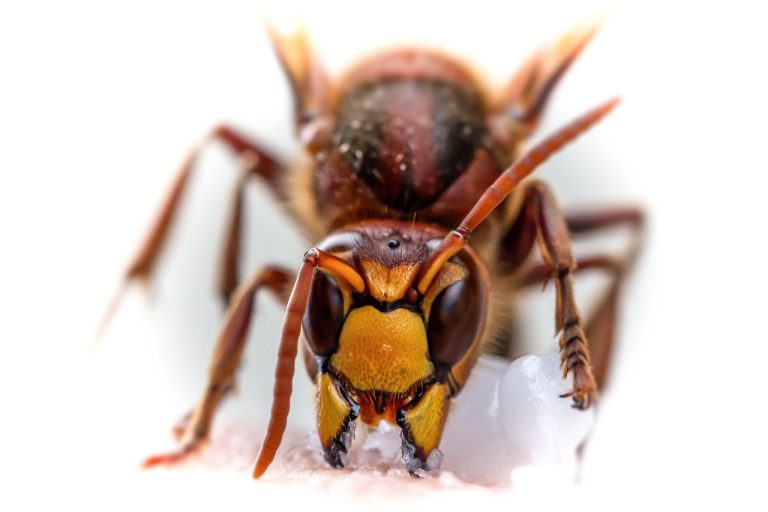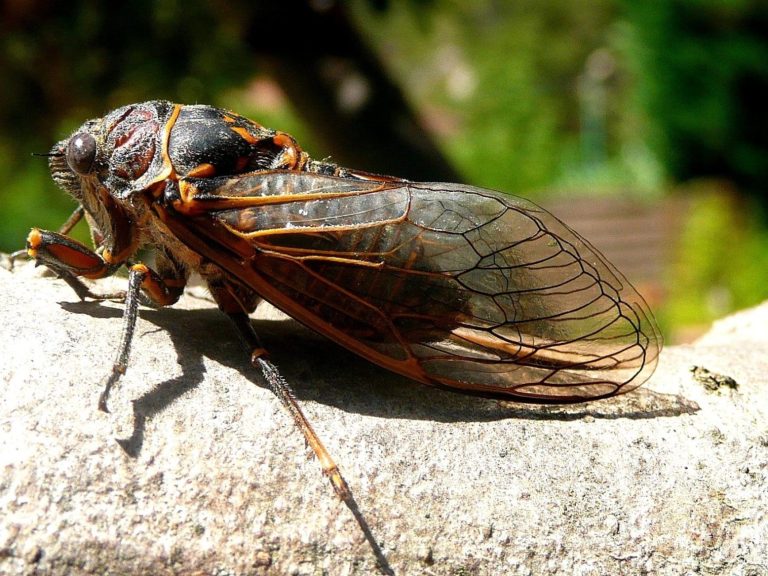
If you’ve spent any time outdoors in Almería during spring or summer, you’ve probably noticed a large, dark bee hovering around wooden beams, fences, or flowering plants. It looks a bit like a bumblebee, but much bigger, shinier, and somehow more deliberate in how it moves. Chances are, you were looking at a carpenter bee.
These insects are a regular part of life in southern Spain, especially in warmer, drier areas like Almería where they thrive.
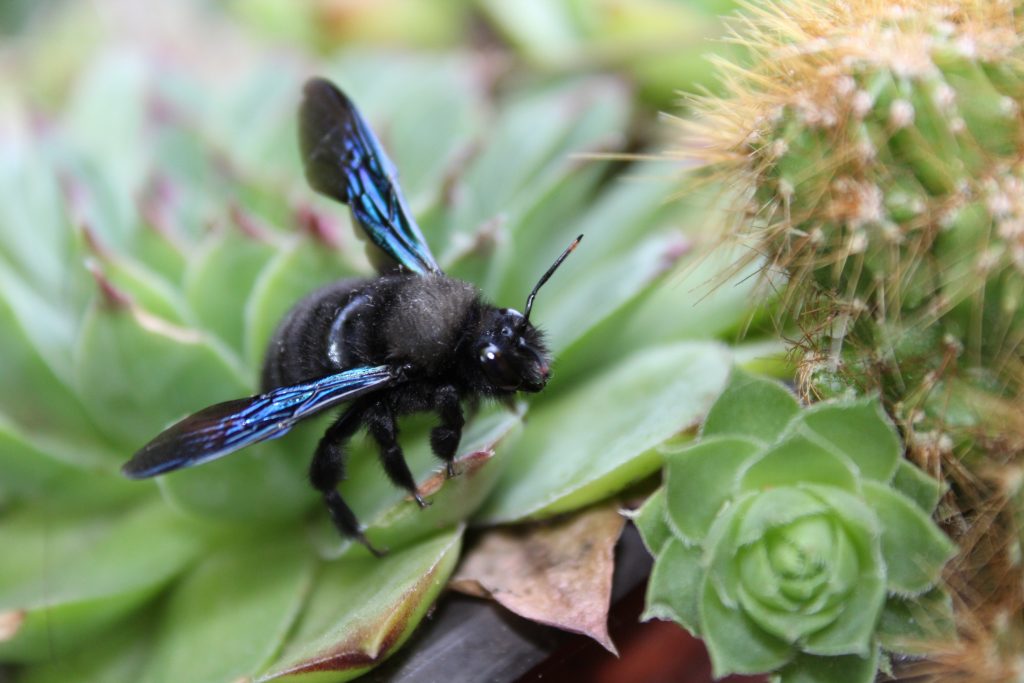
Carpenter bees (genus Xylocopa) are among the largest and most noticeable bees found in southern Spain, including the province of Almería. In this region’s warm, dry Mediterranean climate, species such as the violet carpenter bee (Xylocopa violacea) are particularly common, especially in gardens, orchards, and rural areas.
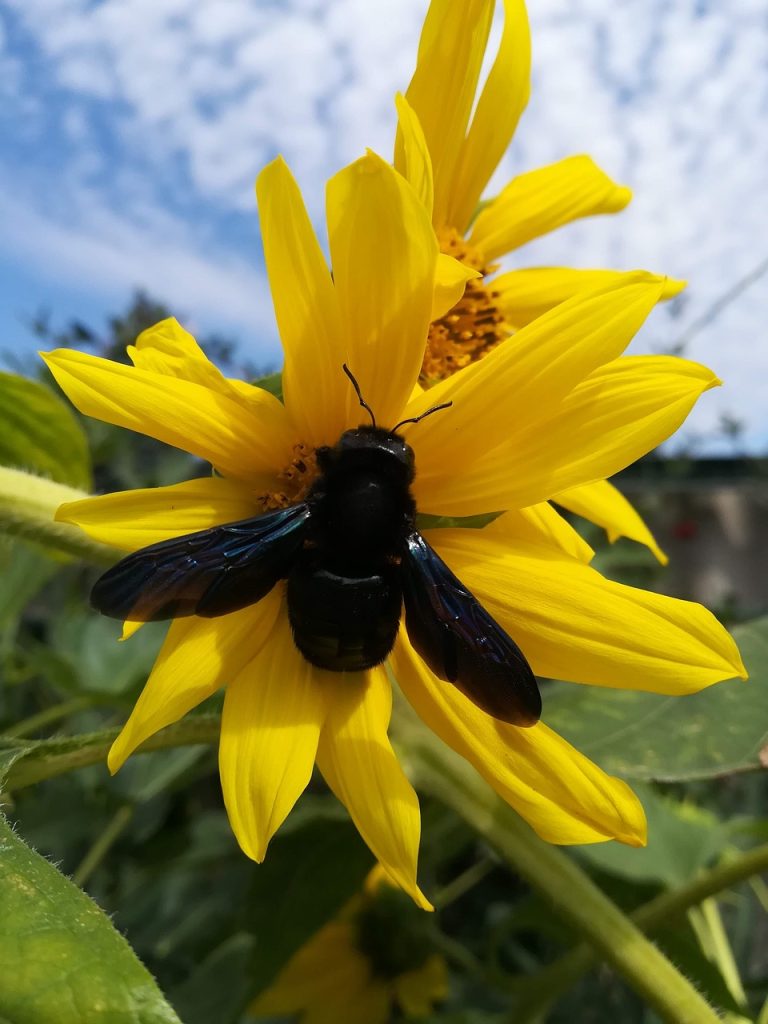
I have seen some here in the garden around the hollyhock flowers, you generally hear them before you see them with their very loud and deep buzz then you will marvel at their sheer size, often described as a lump of coal with wings!
Identification and Size
Carpenter bees are often mistaken for bumblebees at a glance, but there are clear differences. They typically have a smooth, shiny black abdomen rather than the hairy one seen in bumblebees. Their bodies are robust, usually measuring around 1–2.5 cm in length, with some individuals appearing even larger.
In sunlight, their wings can show a metallic or violet sheen, which makes them especially noticeable in open, sunny habitats like those common across Almería.
Distribution and Habitat
Carpenter bees are found worldwide, with hundreds of species spread across Europe, Africa, Asia, and the Americas.
In Spain, they are well adapted to Mediterranean environments, thriving in dry landscapes where wood is available for nesting, this includes dead trees, wooden beams, fences, and even garden structures.
Nesting Behaviour
Their name comes from their distinctive habit of boring into wood to create nests. Using strong jaws, females excavate tunnels in dead or untreated wood.
A typical nest:
- Has a single round entrance hole
- Extends into a network of tunnels
- Contains several individual chambers (cells)
Inside each cell, the female places an egg along with a supply of pollen and nectar, then seals it off using a mixture of chewed wood and saliva.
Unlike termites, carpenter bees do not eat wood, they simply remove it to build their nests.
Life Cycle
- Egg – Laid inside a prepared cell with food
- Larva – Feeds on stored pollen and nectar
- Pupa – Develops into an adult within the nest
- Adult – Emerges, mates, and repeats the cycle
Development typically takes several weeks and new adults often remain in the nest over winter, emerging in spring.
Most species produce one generation per year, although some individuals may live longer in favourable conditions.
Diet and Ecological Role
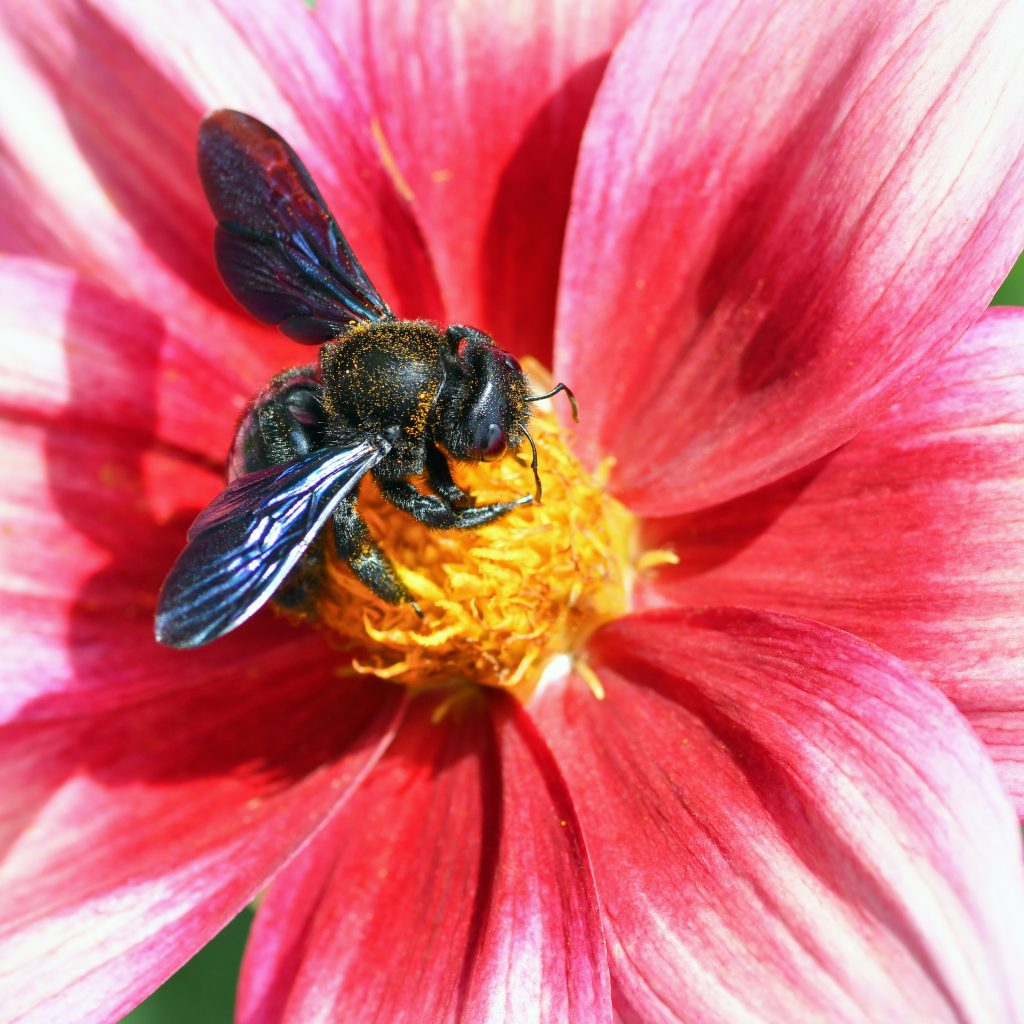
Carpenter bees feed on nectar and pollen, making them important pollinators for both wild plants and crops.
In areas like Almería, where agriculture (especially fruit and vegetable cultivation) is significant, their role as pollinators can be beneficial despite their reputation as minor structural pests.
Behaviour and Social Structure
Most carpenter bees are solitary, meaning each female builds and manages her own nest.
However, some species show simple social behaviour, with two or more females sharing a nest and dividing tasks such as guarding and foraging.
Males are often seen hovering nearby and can appear aggressive, but this is largely bluff, they do not have stingers.
Lifespan
A typical carpenter bee lives around one year, though this can vary depending on species and environmental conditions.
Some individuals may survive longer, especially if they overwinter successfully inside their nests.
Do They Sting?
Carpenter bees are not aggressive. Males often hover nearby and may seem territorial, but they can’t sting at all. Females do have a stinger, but they rarely use it unless directly handled or threatened.
In normal situations, they’re far more interested in flowers and nesting sites than in people.
Presence in Almería
In Almería, carpenter bees are most active during the warmer months (spring to early autumn). The region’s dry climate, abundance of flowering plants, and availability of wooden structures make it an ideal habitat.
They are commonly seen
- Visiting garden flowers
- Hovering near wooden fences or beams
- Nesting in dry, untreated wood
Living Alongside Them
Carpenter bees can cause minor cosmetic damage to wood over time, especially if the same nesting site is reused year after year. However, they’re also part of the local ecosystem and contribute to pollination.
In many cases, it’s simply a matter of awareness, knowing what they are, what they’re doing, and when (if at all) action is needed.
For most people in Almería, carpenter bees are just another sign that the warmer months have arrived.
While carpenter bees can cause minor damage by drilling into wood, they are also valuable pollinators and a natural part of the local ecosystem. In most situations, they can be left undisturbed unless nesting occurs in structurally important timber.