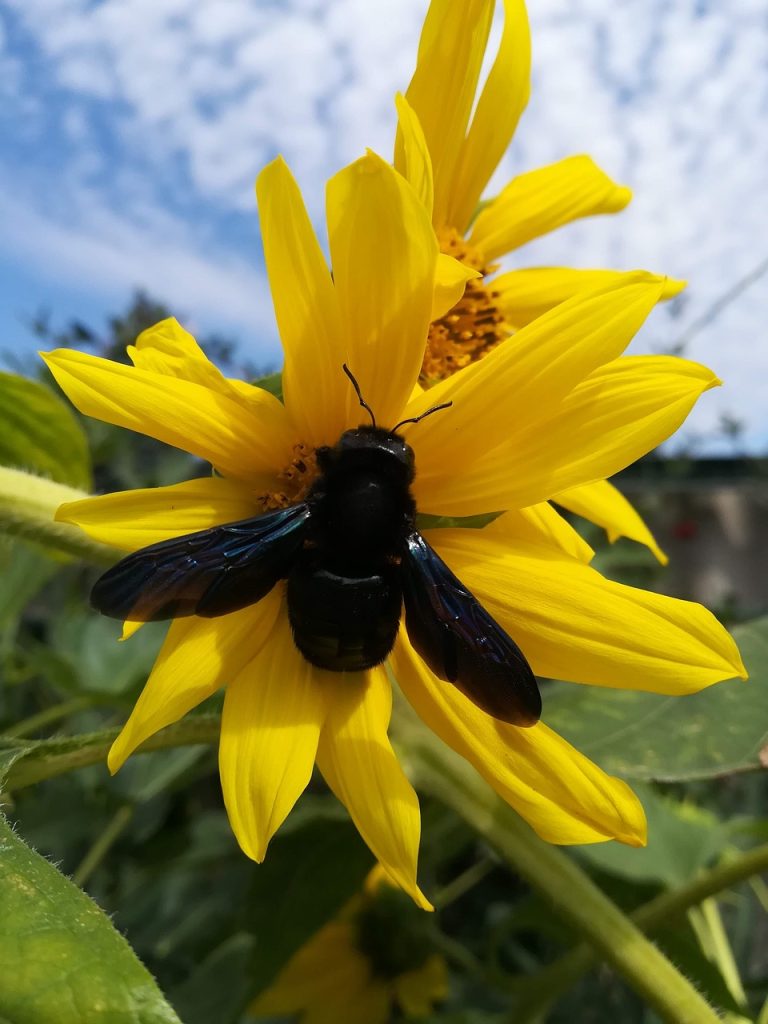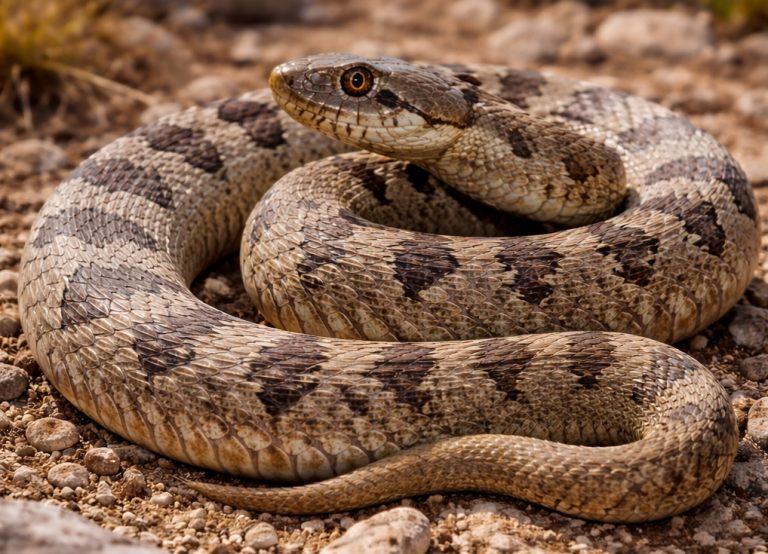
Meet the Wasps of Southern Spain
Mention the word wasp, and most people immediately think of painful stings, ruined picnics and insects that seem determined to spoil a pleasant afternoon by the pool.
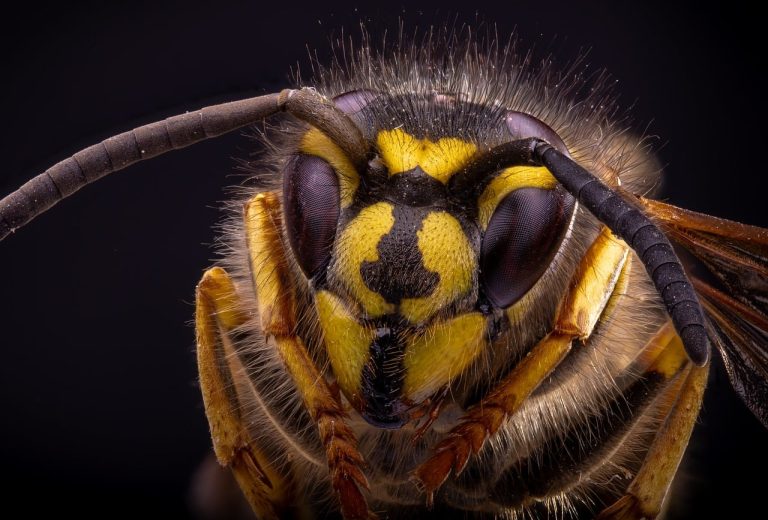
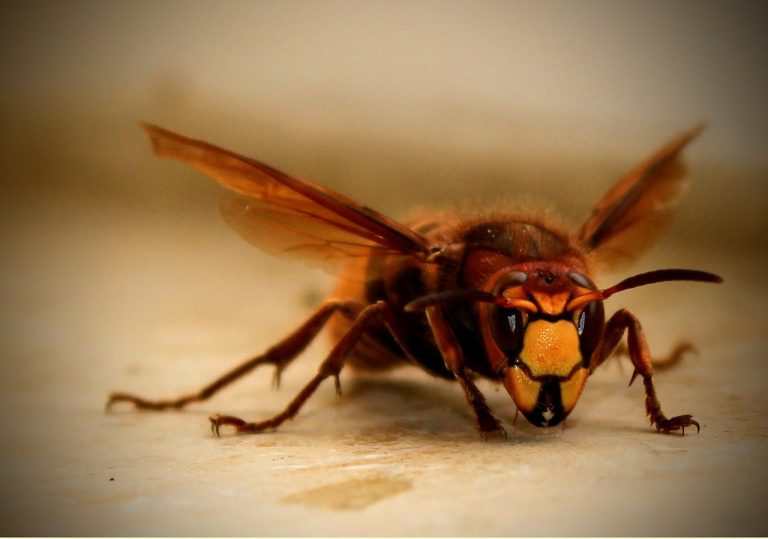
For many people moving to inland Almería, one of the first wildlife surprises is just how many different wasps and hornets they encounter. Some build delicate paper nests under roof tiles, others disappear into holes in the ground, while the largest can be almost five centimetres long and look like something from a science fiction film.
Wasps are among the hardest-working insects in Spain. Every day they hunt thousands of flies, mosquitoes, caterpillars, aphids and other insects that would otherwise become pests around your home and garden. Many species are also important pollinators, visiting flowers throughout the summer while feeding on nectar.
Only a handful of species regularly cause problems for people, and even those are usually defensive rather than aggressive. Most simply want to be left alone.
Learning to recognise the common species makes living alongside them much easier and may even save you from destroying a nest that is actually helping keep your garden free of pests.
Why Are There So Many Wasps in Almería?
Almería offers almost perfect conditions for wasps.
The province enjoys:
- Long, hot summers
- Mild winters
- Low rainfall
- Abundant flowering plants
- Olive and almond groves
- Dry stone walls
- Countless sheltered nesting sites
Unlike northern Europe, where many wasps are only active for a few months each year, Almería’s warm climate allows some species to remain active well into late autumn.
Swimming pools, irrigation systems and garden ponds also provide valuable water sources during the hottest months, making residential gardens particularly attractive.
Which Wasps Are You Most Likely to See?
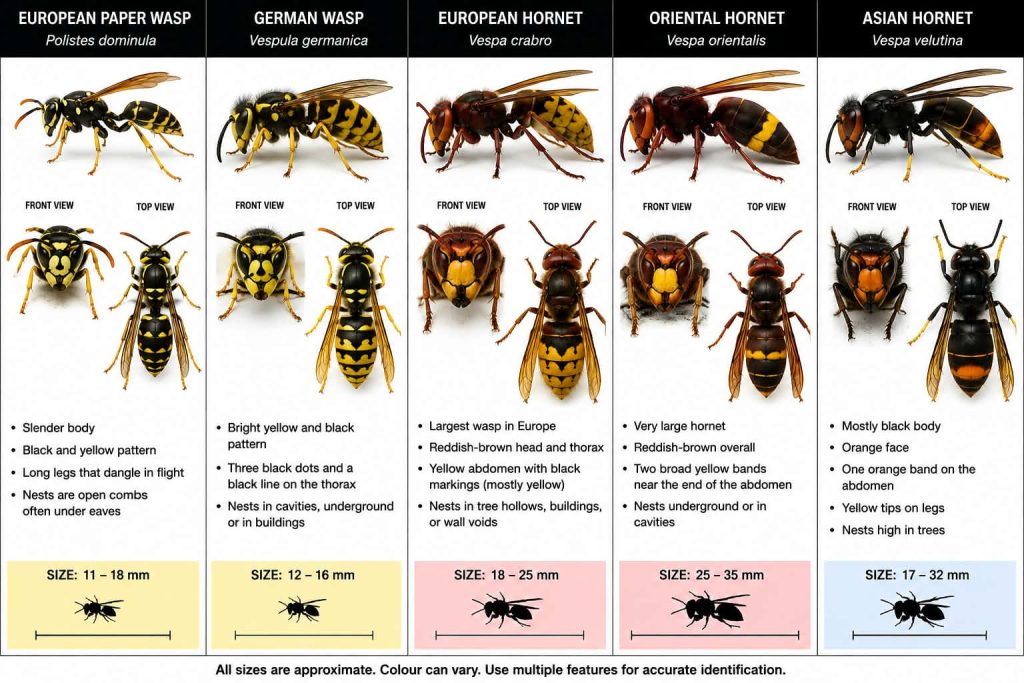
Although dozens of wasp species live in southern Spain, most residents will only encounter five regularly.
| Species | Size | Common in Almería | Aggression | Nest Type |
|---|---|---|---|---|
| European Paper Wasp (Polistes dominula) | 15–18 mm | ★★★★★ | Low | Open paper comb |
| German Wasp (Vespula germanica) | 12–17 mm | ★★★★☆ | High | Enclosed paper nest |
| European Hornet (Vespa crabro) | 25–35 mm | ★★☆☆☆ | Low | Trees & buildings |
| Oriental Hornet (Vespa orientalis) | 25–35 mm | ★★★☆☆ | Moderate | Underground & walls |
| Asian Hornet (Vespa velutina) | 20–30 mm | ★☆☆☆☆ | Moderate | Large aerial nest |
| Mammoth Wasp (Megascolia maculata) | 35–50 mm | ★★★☆☆ | Very Low | Solitary (no nest) |
The first four are true social wasps that live in colonies.
The Mammoth Wasp is completely different, it lives alone and is one of the gentlest insects you’re ever likely to meet.
Wasp, Bee or Hornet?
One of the biggest misconceptions among newcomers is that every yellow-and-black flying insect is a wasp.
In reality, there are some easy ways to tell them apart.
| Feature | Bee | Wasp | Hornet |
|---|---|---|---|
| Body | Furry | Smooth | Smooth |
| Waist | Thick | Very narrow | Narrow |
| Legs | Short | Long | Medium |
| Diet | Nectar & pollen | Insects & sugary foods | Mostly insects |
| Temperament | Usually gentle | Varies by species | Usually calm |
| Can sting repeatedly? | No (honey bee) | Yes | Yes |
Bees
Bees are generally hairy because the fine hairs help them collect pollen.
You’ll often see them moving slowly from flower to flower with bright yellow pollen baskets on their hind legs.
Unless trapped or handled, they’re remarkably tolerant of people.
Wasps
Wasps have shiny bodies and a very obvious narrow waist.
Most are hunters, spending much of the day catching insects to feed their developing larvae.
Later in the summer, many species switch to sugary foods, which is why they become interested in barbecues, fruit and soft drinks.
Hornets
Hornets are simply very large wasps.
Despite their fearsome appearance, most hornets are surprisingly relaxed around humans and spend their time hunting flies, beetles and other insects.
Their reputation is generally worse than their behaviour deserves.
Why Wasps Matter
It’s easy to think of wasps as pests, but without them our gardens would be overrun with insects.
A single colony of paper wasps may remove thousands of caterpillars during the summer.
German wasps catch flies by the hundreds.
Hornets help control beetles, moths and even other wasps.
Many flowering plants also benefit from wasps visiting them while feeding on nectar.
Without wasps, farmers would face much greater insect damage to crops, and many gardeners would need to rely more heavily on pesticides.
They are, quite literally, free pest controllers.
Species Profile: European Paper Wasp
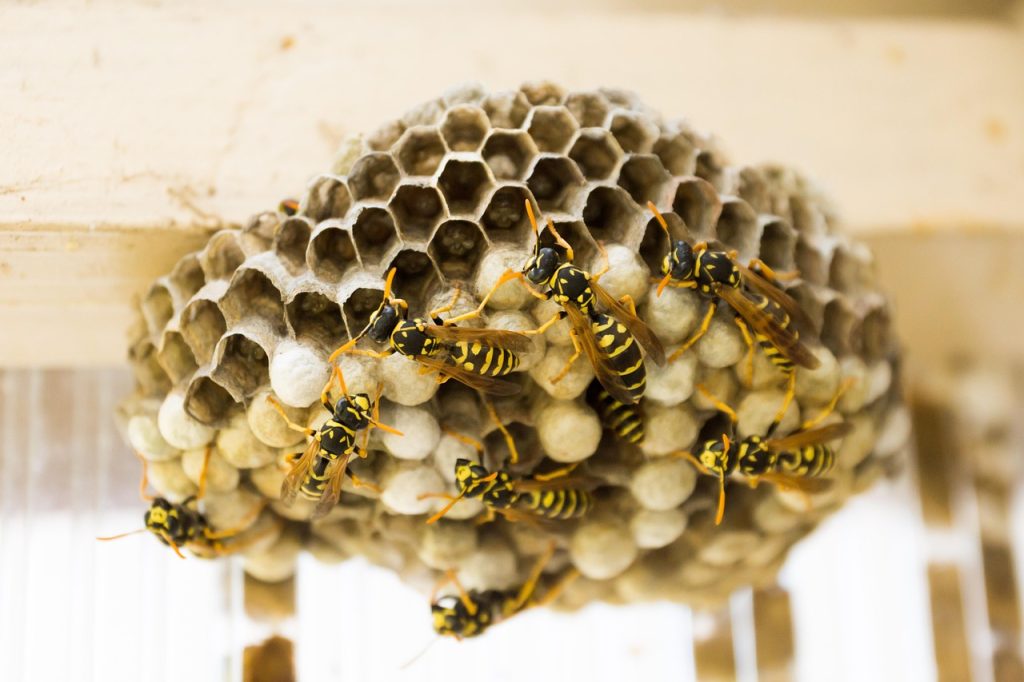
(Polistes dominula)
If you live anywhere in Almería, this is almost certainly the wasp you’ll see most often.
Elegant, slender and surprisingly colourful, the European Paper Wasp is one of the most successful insects in southern Europe.
Unlike many wasps, it is generally tolerant of people and rarely causes problems unless its nest is disturbed.
Identification
Length:
15–18 mm
Colour:
Bright yellow with black markings.
Body:
Long and slender with a very narrow waist.
Legs:
Long orange legs that dangle beneath the body while flying.
Flight:
Slow, graceful and noticeably different from the rapid darting flight of common wasps.
Once you’ve noticed those dangling orange legs, you’ll recognise this species instantly.
Where Do They Nest?
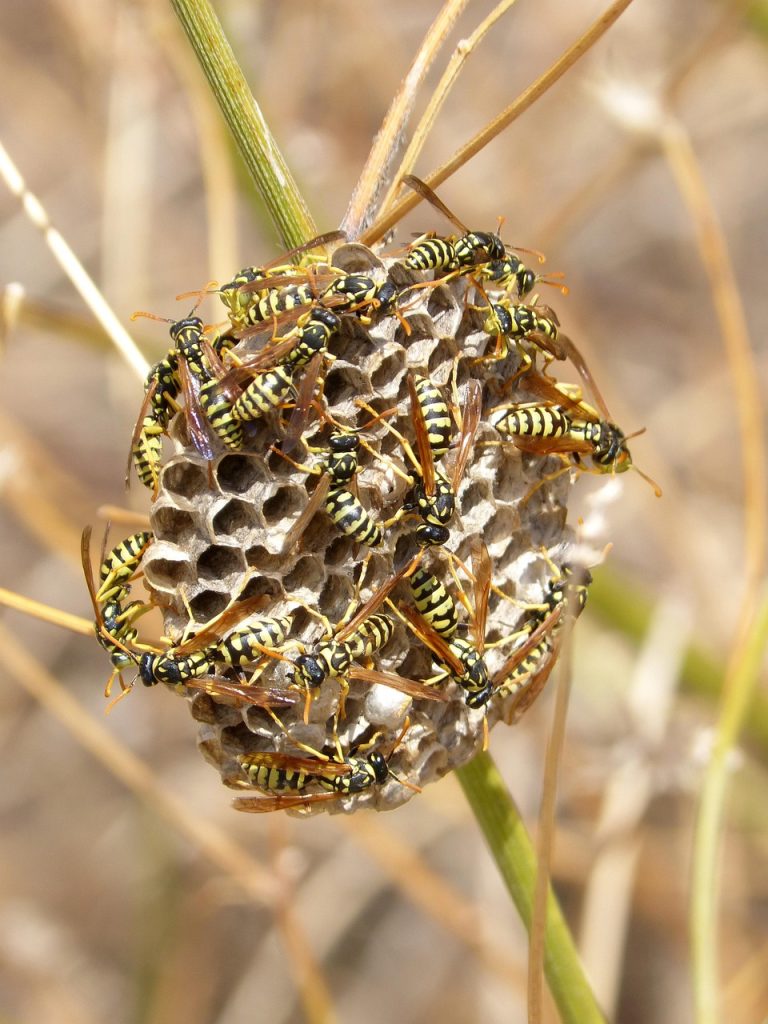
European Paper Wasps build beautiful open paper nests made from wood fibres that they scrape from fences, old timber and dead branches.
The wood is chewed into a paper-like pulp before being moulded into delicate honeycomb cells.
Unlike enclosed wasp nests, these combs remain exposed.
Common nesting locations include:
- Roof eaves
- Pergolas
- Garage ceilings
- Garden sheds
- Outdoor lights
- Window shutters
- Air-conditioning units
- Barbecue shelters
- Fence posts
Most nests are only the size of a tennis ball, although larger colonies can become surprisingly impressive by late summer.
How Is the Nest Started?
Each spring, a single fertilised queen emerges from hibernation.
She begins construction alone.
The first eggs hatch into workers, who gradually take over nest building while the queen concentrates on laying eggs.
By August, a successful colony may contain several dozen adults.
Unlike honey bees, colonies remain relatively small.
Temperament
Aggression Rating: ★★☆☆☆
This is probably the friendliest social wasp in Almería.
Most people can work within a metre or two of a nest without any problems.
They usually become defensive only if:
- The nest is touched.
- Vibrations disturb the colony.
- Someone attempts to remove the nest.
- They become trapped in clothing.
Away from the nest, they show very little interest in people.
What Do They Eat?
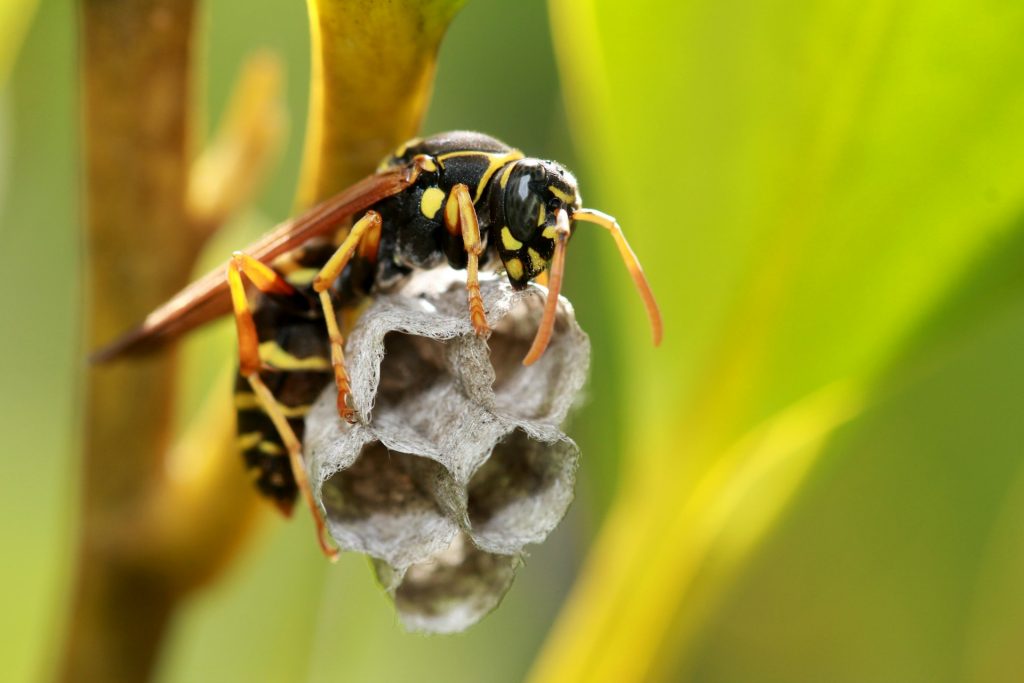
Adults enjoy:
- Nectar
- Tree sap
- Overripe fruit
- Sugary liquids
The larvae, however, are carnivores.
Workers spend much of the day hunting:
- Caterpillars
- Aphids
- Flies
- Mosquitoes
- Small spiders
- Leaf-eating insects
This makes Paper Wasps one of the gardener’s greatest allies.
A healthy colony can remove thousands of plant-eating insects during a single summer.
When Will You See Them?
| Month | Activity |
|---|---|
| February–March | Queens emerge |
| April | First nests appear |
| May–June | Worker numbers increase |
| July–August | Colonies reach peak size |
| September | New queens produced |
| October–November | Colony dies off |
The old nest is never reused and in the spring each new queen starts again from scratch.
Should You Remove the Nest?
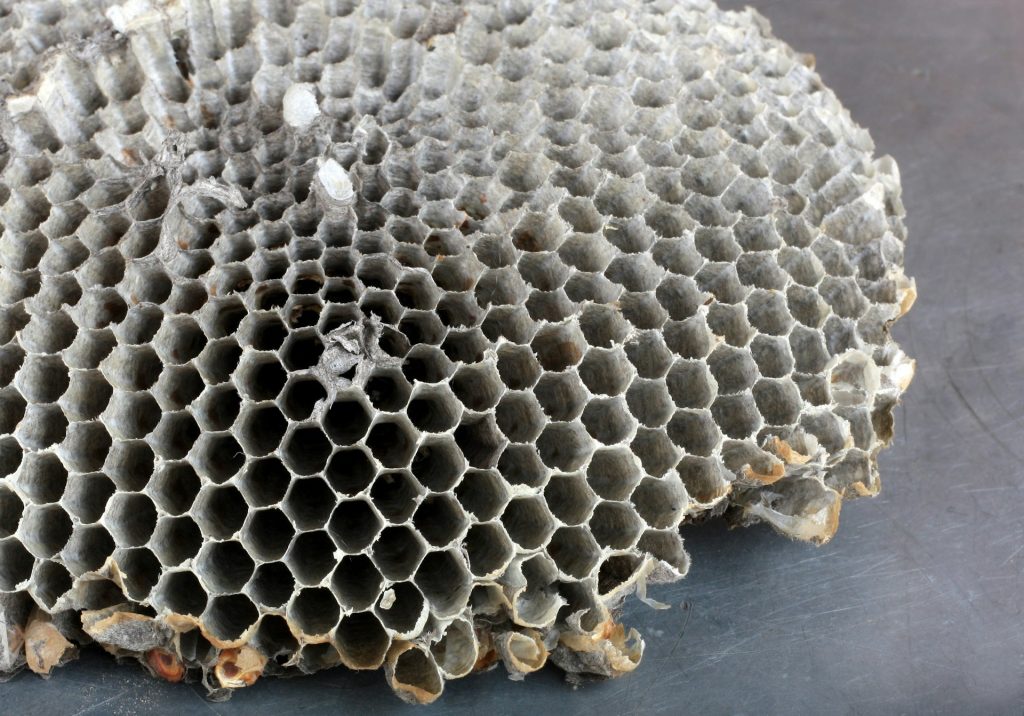
Usually no.
If a Paper Wasp nest is:
- High under the eaves
- Away from doors
- Not near children’s play areas
- Not beside a swimming pool
…it can often be left safely in place.
The wasps will spend the summer removing pests from your garden before naturally dying out in autumn.
If the nest is in a location where people regularly pass close by, professional removal may be sensible.
Avoid spraying nests unnecessarily. Paper Wasps are among the least troublesome of all Spain’s social wasps and provide valuable natural pest control.
Did You Know?
Paper Wasps can recognise individual faces.
Research has shown that Polistes dominula is one of the few insects capable of recognising and remembering the facial patterns of other members of its colony. This remarkable ability helps maintain social order and hierarchy within the nest.
Coming in Part 2…
In the next part of this guide we’ll look at:
- The German Wasp – the species most likely to steal your lunch.
- The European Hornet – surprisingly gentle despite its size.
- The Oriental Hornet – increasingly important in southern Spain and a predator of honey bees.
- The Asian Hornet – why it’s making headlines across Europe, and why it’s still uncommon in Almería.