If you live in Spain, or you’re thinking of moving here, there’s one creature you really need to know about, the pine processionary caterpillar.

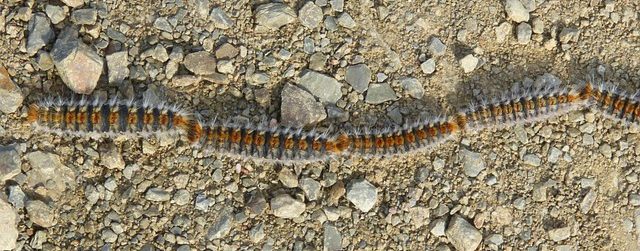
They look odd, move in long lines like something out of a horror film, and they can be dangerous to humans and deadly to pets, especially dogs.
Every year, people get caught out simply because no one warned them.
What Are Processionary Caterpillars?
Processionary caterpillars are the larvae of the pine processionary moth (Thaumetopoea pityocampa).
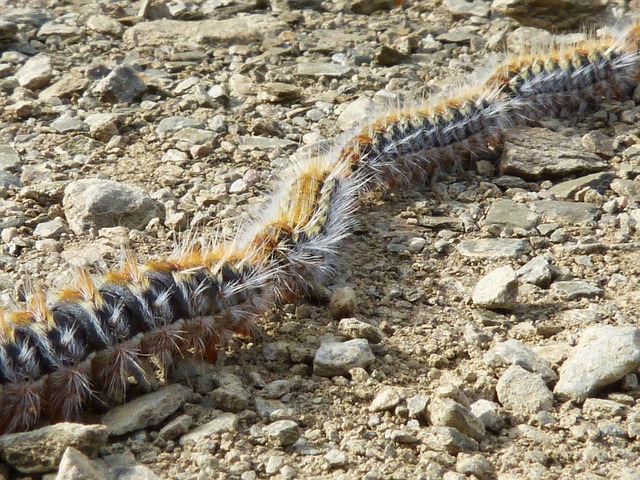
They get their name from the way they move, head to tail, in long “processions”, often across paths, gardens, roads, and woodland tracks.
They are extremely common in Spain and are considered a serious public health and animal welfare issue.
Where Are They Found in Spain?
You’ll usually find processionary caterpillars:
- Around pine trees
- In pine forests and woodland
- In parks and green areas
- In gardens with pine trees
- Along rural tracks and footpaths
- Even in towns and urbanisations with mature trees
They are widespread across Andalucía, Valencia region, Murcia, Catalonia, Castilla-La Mancha, basically most of mainland Spain. If there are pine trees nearby, assume they could be present.
The Life Cycle (Why Timing Matters)
Understanding their life cycle helps you know when to be extra cautious.
Autumn & Winter
- Moths lay eggs in pine trees
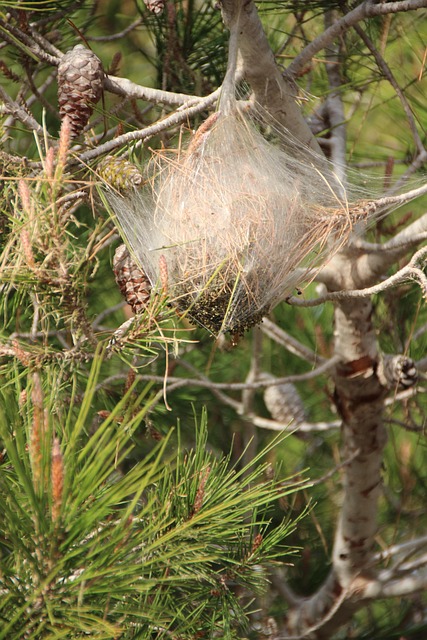
- Caterpillars hatch and build large white silk nests (often called “bags”) high in the branches
Late Winter to Early Spring (Most Dangerous Time)
- Caterpillars leave the trees
- They march in long lines across the ground
- This is when people and pets usually encounter them
Spring
- They burrow into the soil
- Transform into moths
- Cycle starts again later in the year
Why Are Processionary Caterpillars Dangerous?
The danger isn’t from biting or stinging.
It’s from the tiny barbed hairs (often called “fluff”) that cover their bodies.
These hairs are toxic, break off easily, can be carried by wind, stick to skin, eyes, clothes, and fur and cause severe allergic reactions.
Even dead caterpillars or old nests can still be dangerous.
Risks to Humans
In people, exposure can cause:
- Skin rashes and intense itching
- Redness and swelling
- Blisters
- Eye irritation or conjunctivitis
- Throat irritation
- Breathing difficulties (in severe cases)
- Allergic reactions
Children are especially at risk because they’re curious and may try to touch them.
Risks to Dogs and Other Pets
This is where it gets serious.
Dogs are extremely vulnerable because they sniff and lick things.
Contact can cause:
- Severe swelling of the mouth and tongue
- Drooling and foaming
- Vomiting
- Ulcers in the mouth
- Tissue death (parts of the tongue can die)
- Breathing difficulties
- Death if not treated quickly
⚠️ This is a veterinary emergency. Minutes matter.
Cats are less likely to be affected but can still be harmed.
What to Do If You See Processionary Caterpillars
Do NOT:
Touch them, kick them, let children near them, let dogs sniff or investigate or try to remove nests yourself
Do:
Keep your distance, put dogs on a lead immediately, change your route if walking and warn others nearby
If they’re in a public area, report them to:
- The local council (ayuntamiento)
- Policía Local
- Community or urbanisation management
Professional pest control is required not DIY solutions.
What to Do If You’re Exposed (Humans)
If you think you’ve been exposed to the hairs:
- Do not scratch
- Wash the affected area with soap and plenty of water
- Rinse eyes gently with clean water or saline
- Remove contaminated clothing and wash it separately at high temperature
- Avoid rubbing the area
Seek medical advice if:
- Symptoms worsen
- You have breathing issues
- Eyes are badly affected
- You have a known allergy
What to Do If Your Dog Is Exposed
This is critical.
Immediate action:
- Do NOT let your dog lick or rub
- Rinse the mouth and tongue with plenty of water
(from the side of the mouth, don’t force water down the throat) - Wear gloves if possible
Then:
- Go straight to a vet
- Do not “wait and see”
- Tell the vet it’s processionary caterpillar exposure
Fast treatment can save your dog’s life.
How to Reduce the Risk
- Avoid pine forests during peak season
- Keep dogs on leads in risky areas
- Learn to recognise the nests in trees
- Check your garden regularly if you have pine trees
- Ask neighbours or urbanisation managers about treatment programmes
Many councils carry out annual control measures, but it’s not always enough.
A Quick Reality Check
Spain is a fantastic place to live, but this is one of those local hazards no one warns you about until it’s too late.
Every year, vets treat dogs that didn’t need to suffer simply because owners didn’t know.
Once you’re aware, it’s manageable. Unaware? It can be a nightmare.
The One Thing to Remember
If you see hairy caterpillars walking in a line:
Keep away, keep pets away, don’t touch, act fast if exposed.
That knowledge alone can prevent a very bad day.