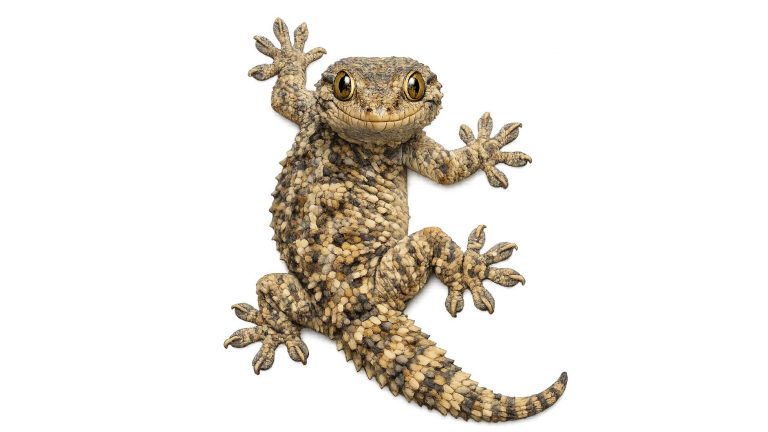
If you’re new to Almería or thinking about moving here, the word snake can trigger all sorts of unnecessary panic. Snakes exist in Almería, but they’re not a daily danger, and the vast majority are harmless.
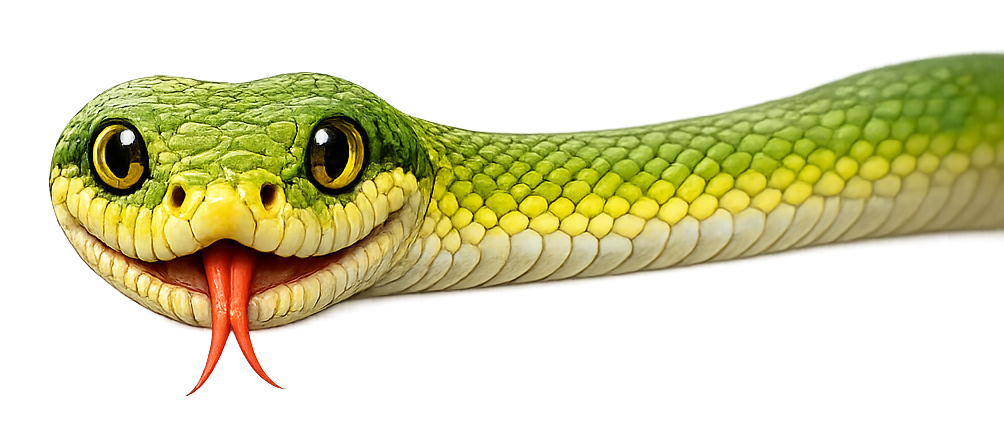
This is a dry, warm province with plenty of scrubland, rocky hills, farmland and irrigation channels, perfect snake habitat. That doesn’t mean they’re lurking behind every olive tree. Most people live here for years and only ever see one or two, usually crossing a road or disappearing into scrub.
Snakes in Almería and how to tell them apart
Most snake sightings in Almería are brief, a flash of movement, something crossing a track, or a shape disappearing into scrub. Colour and pattern are usually all you have to go on. Below are the main visual cues for the species found in the area.
Montpellier Snake (Malpolon monspessulanus)
The Montpellier snake is the largest snake you’ll find in Spain and the one most likely to be misidentified as something terrifying. Adults commonly reach 1.5 to 2 metres, and occasionally more. They’re fast, alert, and impressive to watch, which is why sightings tend to stick in people’s memories. Technically, the Montpellier snake is mildly venomous, but it’s rear-fanged and not dangerous to humans. Bites are extremely rare and usually only occur if someone tries to handle one. You’re far more likely to see it glide off at speed than stand its ground.
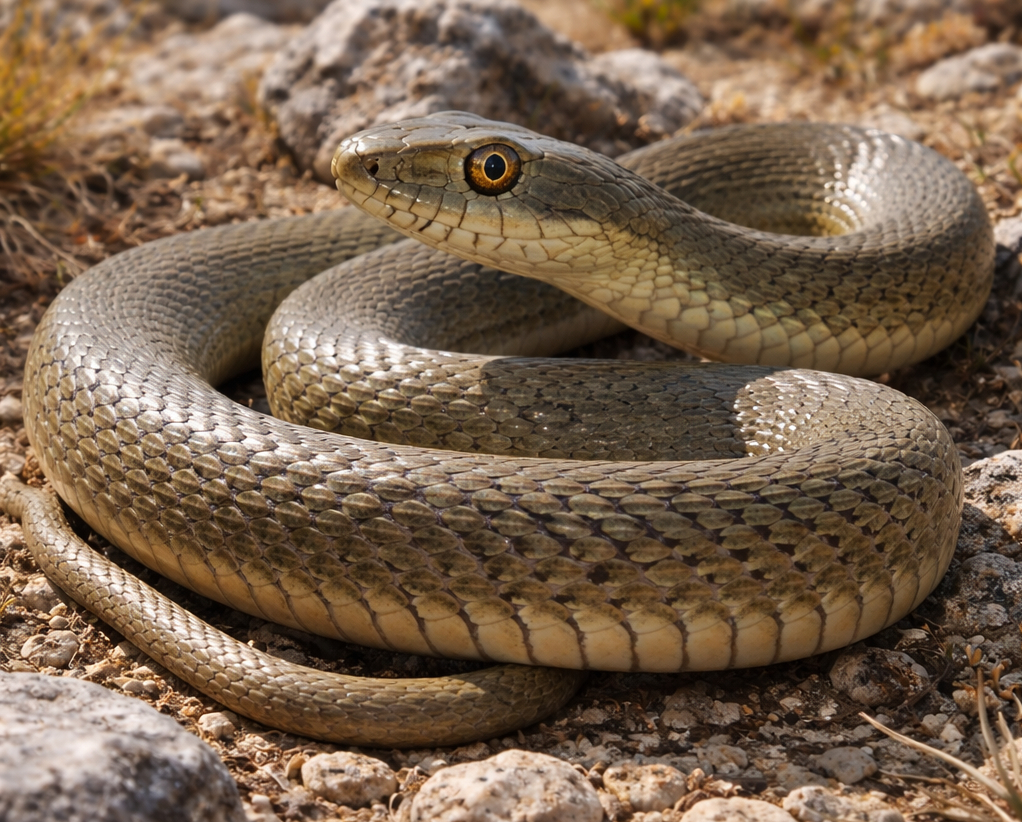
- Colour: Olive green, brownish-green, or grey
- Pattern: Generally plain, sometimes faint darker mottling
- Underside: Yellowish or pale cream
- Notable feature: Prominent brow ridge gives a slightly “grumpy” look
- Diet: Small mammals (mice, rats), lizards, birds, occasionally eggs. Hunts actively, using speed to catch prey. Its mild venom helps subdue lizards and small rodents.
Adults often appear almost solid in colour, especially older males. In bright sunlight they can look greenish; in shade they may appear brown or grey, which is why people sometimes misjudge their identity.
Ladder Snake (Zamenis scalaris)
The ladder snake grows to around 1.5 metres and is completely non-venomous. They’re calm by snake standards and tend to freeze or retreat when startled.
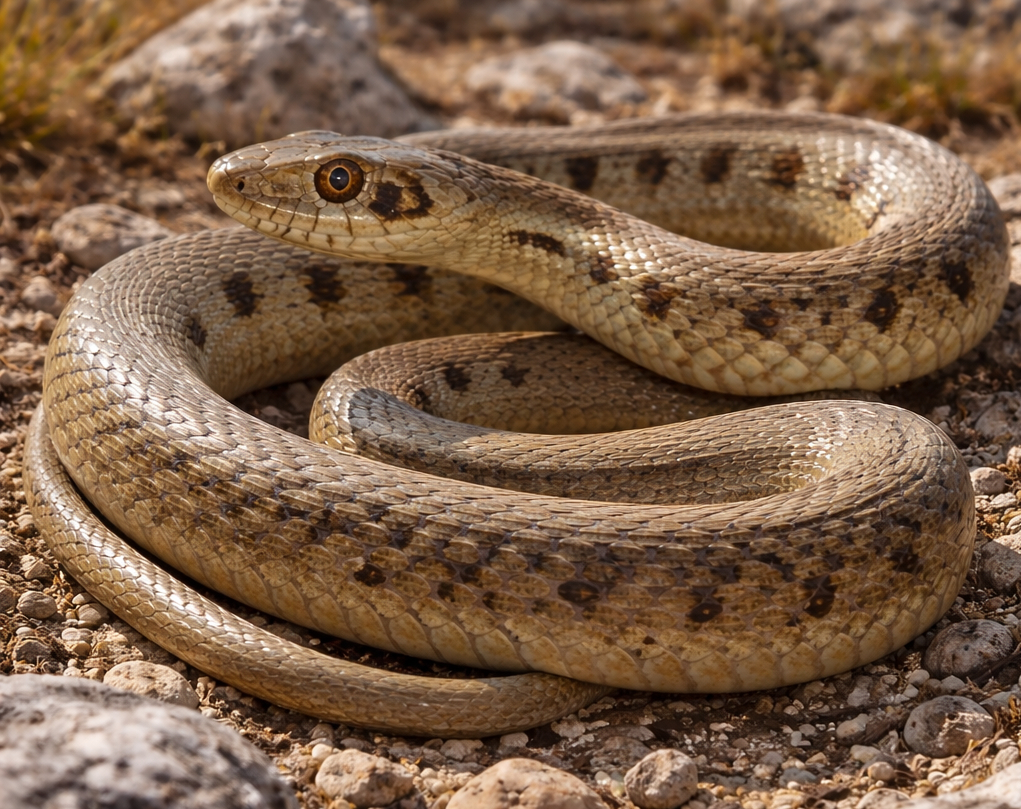
- Colour: Light brown, tan, or yellowish
- Pattern: Two dark parallel lines down the back in juveniles (ladder shape)
- Adults: Pattern fades, leaving dark side stripes or blotches
- Underside: Pale cream or yellow
- Diet: Small mammals, birds, lizards, amphibians. Opportunistic hunter. Juveniles mostly eat lizards and small invertebrates; adults can take larger prey like mice.
Young ladder snakes are the easiest to identify thanks to the clear ladder marking. As they mature, the pattern breaks up, which leads to frequent confusion with other species.
Horseshoe Whip Snake (Hemorrhois hippocrepis)
The horseshoe whip snake is slimmer, quicker, and usually between 1 and 1.5 metres long. It likes rocky ground, stone walls and ruins, which is why it sometimes turns up near rural homes. Again, it’s non-venomous and poses no threat.
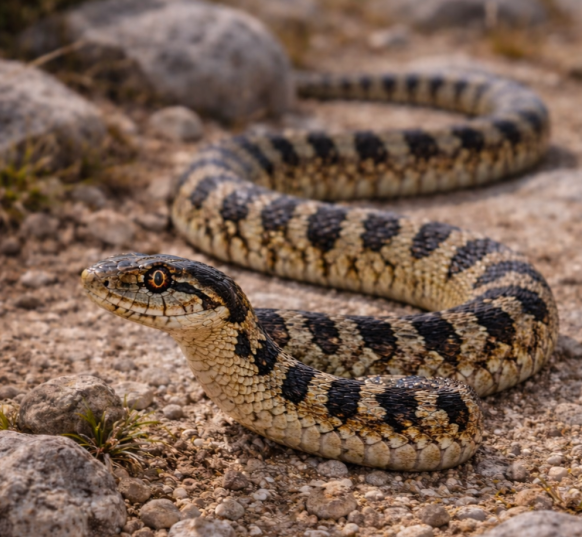
- Colour: Grey, olive, or light brown
- Pattern: Dark, irregular blotches along the body
- Head marking: Horseshoe-shaped marking on the back of the head
- Underside: Yellowish with darker edges
- Diet: Lizards, geckos, small mammals, occasionally birds. Very agile, often hunts among rocks and walls, especially near old buildings.
This species tends to look quite bold and contrasty. The head marking isn’t always obvious during a quick sighting, but when visible it’s a good clue.
Viperine Snake (Natrix maura)
Despite the zigzag markings and dramatic hissing, the viperine snake is not venomous. It relies on bluff to scare predators and would much rather escape into the water than confront a human.
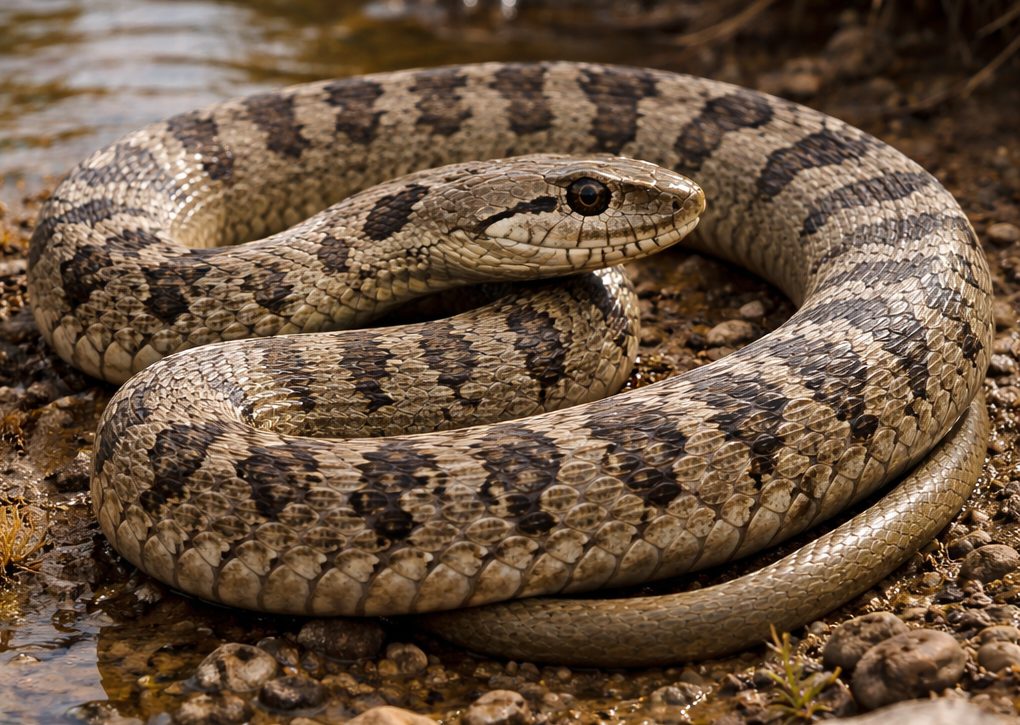
- Colour: Grey, brown, or olive
- Pattern: Strong zigzag down the back (viper mimicry)
- Sides: Dark blotches or bars
- Underside: Yellowish with dark markings
- Diet: Mostly amphibians (frogs, newts), occasionally small fish and invertebrates. Semi-aquatic, so it’s commonly found near streams, ponds, or irrigation channels.
This is the one most often mistaken for a viper. The zigzag is deliberate camouflage and defence, not a sign of venom. Near water, a zigzag-patterned snake is far more likely to be viperine than anything else.
Southern Smooth Snake (Coronella girondica)
he southern smooth snake, grows to around 50–70 cm and spends most of its life hidden under stones or vegetation. These are shy, discreet animals and are rarely encountered.
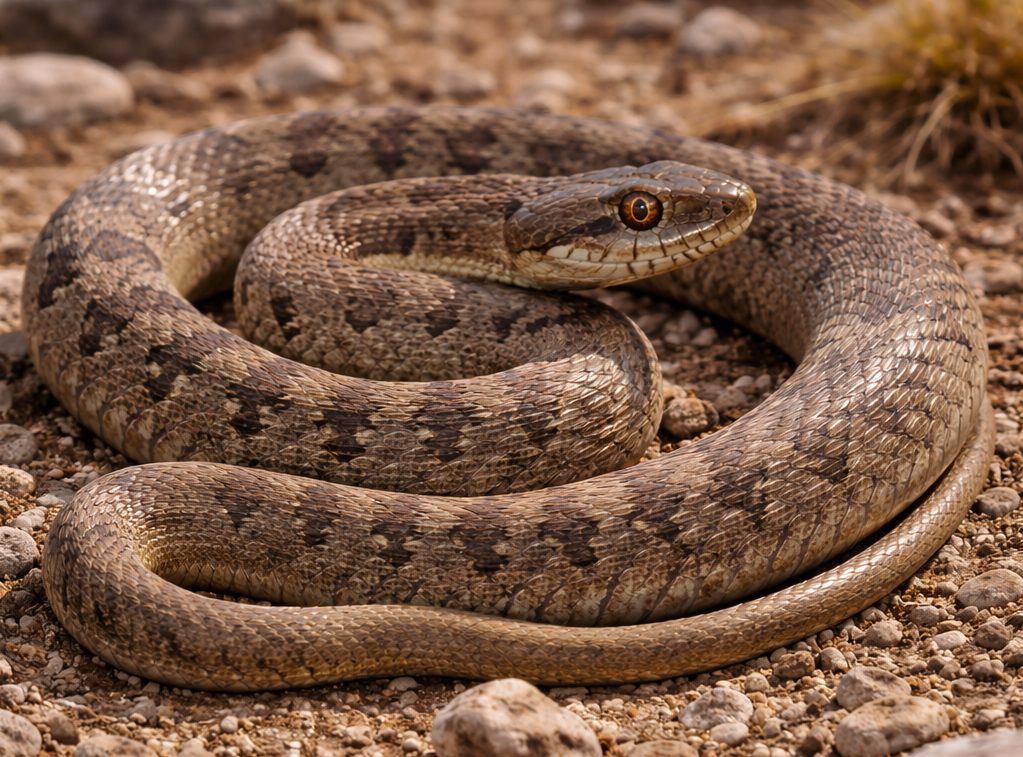
- Colour: Brown, grey, or reddish-brown
- Pattern: Small dark spots or faint crossbands
- Head: Dark line through the eye
- Underside: Uniform pale grey or yellow
- Diet: Primarily lizards and smaller snakes, occasionally small mammals. Small and secretive, it uses constriction rather than venom to subdue prey.
Subtle and understated. These snakes blend extremely well into rocky terrain and leaf litter, which is why they’re rarely seen.
Lataste’s Viper (Vipera latastei)
Yes, it is venomous. No, it is not common. In Almería, it’s generally restricted to remote, mountainous or rocky areas with very little human activity. Most locals will never see one in their lifetime, and bites are exceptionally rare.
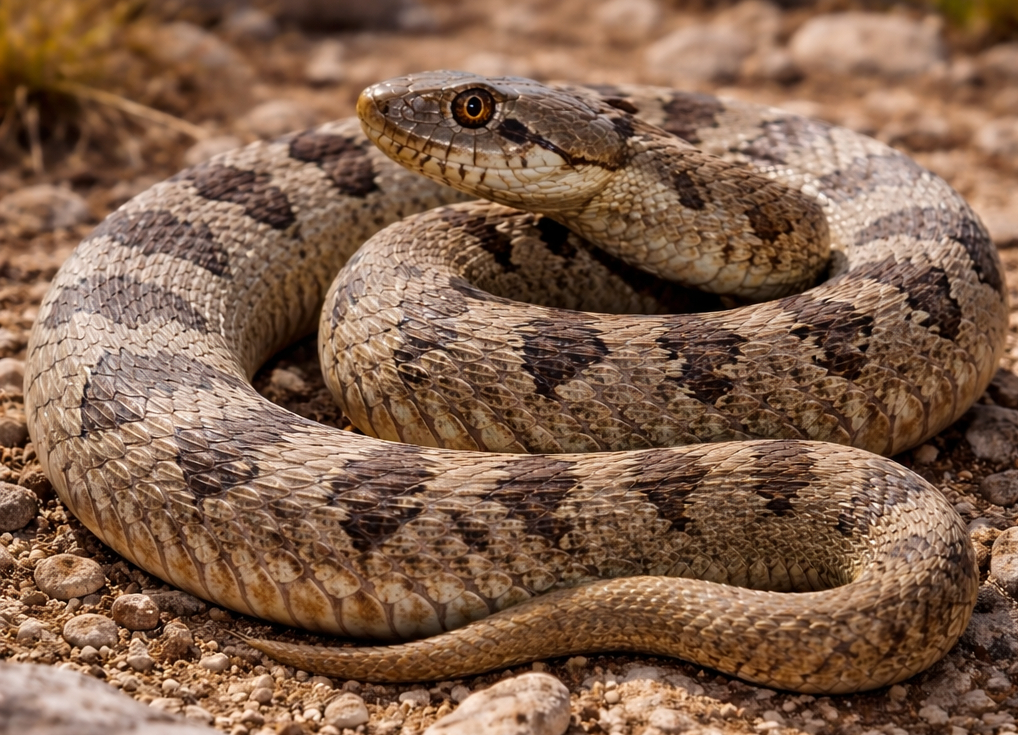
- Colour: Grey, brown, or sandy
- Pattern: Bold zigzag down the spine
- Head: Distinct triangular shape with darker markings
- Tail: Often ends in a lighter or yellowish tip
- Diet: Small mammals (mainly rodents), lizards, occasionally amphibians.
Compared to other snakes, vipers tend to look shorter, thicker, and more compact. In Almería, sightings are uncommon and usually in remote, high or rocky areas.
A Quick Reality Check on Identification
Colour alone is not a reliable way to identify a snake. Light, age, shedding skin, and environment all affect how a snake looks. Pattern, body shape, location, and behaviour together give a clearer picture, but in practice, the safest rule is simple:
If you don’t know what it is, don’t go near it.