Scorpions are native to the region and have been here long before humans built houses.
Almería’s dry climate, rocky ground, and rural landscape make it ideal scorpion territory. That said, most people go years without ever seeing one, and many never encounter one at all.
What Types of Scorpions Are Found in Almería?
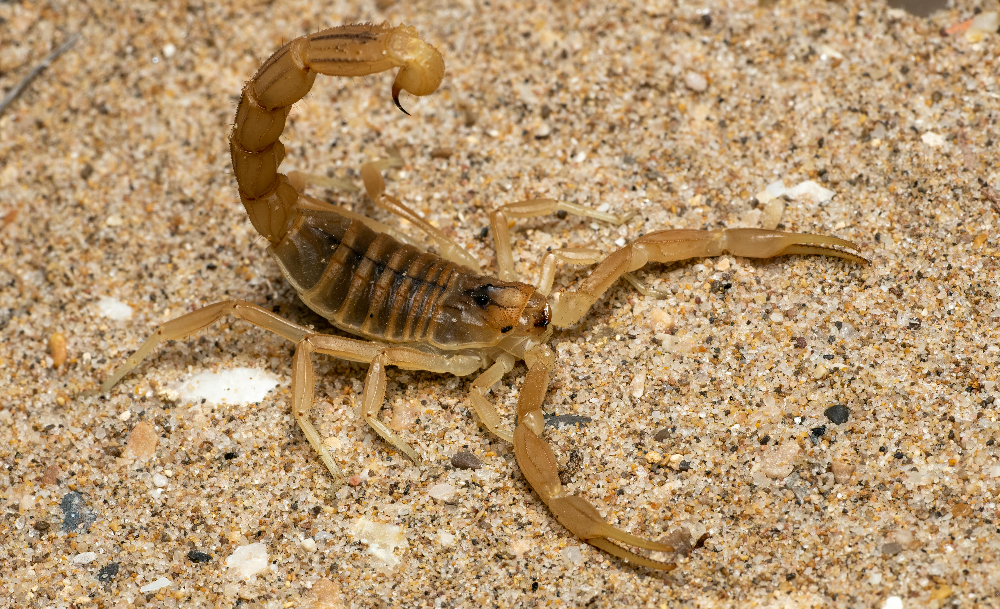
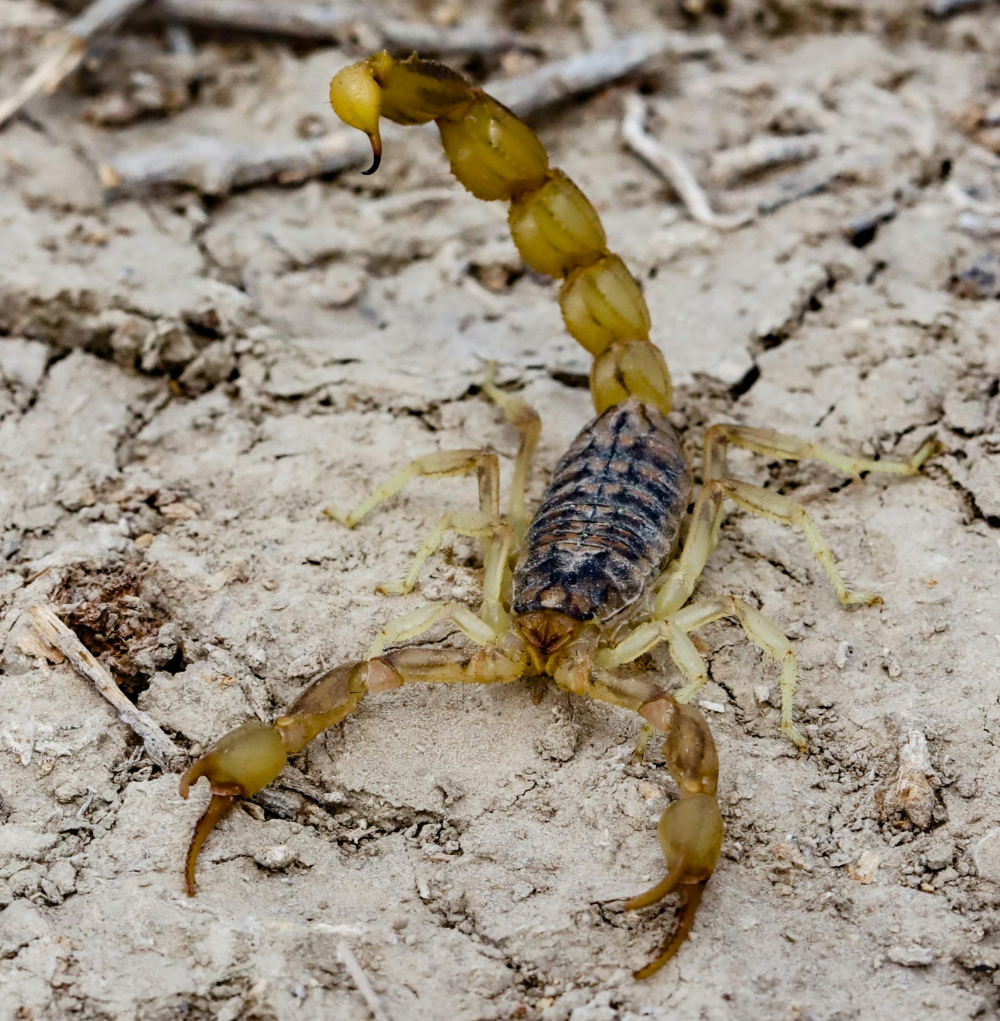
The most common species in the province is the Mediterranean Yellow Scorpion (Buthus occitanus)
- Pale yellow to light brown
- Around 5–7 cm long
- Slender body with a curved tail
- Mostly nocturnal
Are Scorpions in Almería Dangerous?
The answer is generally no.
The Mediterranean yellow scorpion:
- Is venomous, but not deadly to healthy adults
- Delivers a sting comparable to a wasp or bee sting
- Is painful, but rarely serious
Most stings result in, localised pain, mild swelling and temporary redness
Serious reactions are very rare, but extra caution is needed for children, the elderly and anyone with allergies or medical conditions
Deaths from scorpion stings in Spain are exceptionally rare.
Where Do Scorpions Usually Live?
Scorpions prefer quiet, dark, undisturbed places.
Outdoors under stones and rocks, in dry stone walls, wood piles, under plant pots and in sheds and outbuildings.
If they do come in doors, which is rare but possible, they could be found in ground-floor rooms, garages, bathrooms and storage areas. They don’t “infest” houses. If one turns up indoors, it’s almost always by accident.
When Are Scorpions Most Active?
Scorpions are nocturnal, most active during warm months and more likely to be seen in summer and early autumn.
During extreme heat or after heavy rain, they may move looking for shelter.
What to Do If You See a Scorpion
Do not:
- Panic
- Try to grab it
- Stamp on it barefoot
Do:
- Keep your distance
- Use a glass and stiff card to trap it
- Guide it outside if possible
- Or contact pest control if you’re uncomfortable
Wearing shoes or gloves makes accidental stings extremely unlikely.
What to Do If You’re Stung
- Wash the area with soap and water
- Apply a cold pack to reduce pain and swelling
- Avoid scratching
- Take standard pain relief if needed
Seek medical advice if:
- Pain becomes severe
- Swelling spreads
- You feel unwell
- The sting involves a child or vulnerable person
In most cases, treatment is simple and symptoms pass within hours.
Scorpions and Pets
Dogs and cats are curious, which makes them more likely to investigate. Most stings to pets are not fatal, dogs may yelp, limp, or lick the area, any swelling is usually localised.
If your pet is stung:
- Keep them calm
- Contact a vet for advice
- Seek immediate help if there’s facial swelling or breathing issues
How to Reduce the Risk of Scorpions in Your Home
You don’t need to turn your house into a fortress, but a few sensible steps help:
- Shake out shoes and gloves if stored outside
- Avoid leaving clothes on the floor
- Seal cracks and gaps
- Keep wood piles away from the house
- Reduce clutter in garages and sheds
- Use outdoor lighting wisely (it attracts insects, which attract scorpions)
Scorpions sound far scarier than they are.
For most residents of Almería they’re something you hear about more than see, encounters are very rare, serious incidents are rarer still
They’re part of the natural environment, not a sign that something’s wrong with your home.